

Dental implants are often described as a permanent solution, and in many ways they are. But the complete picture is more nuanced than that single word suggests. The titanium post that fuses with your jawbone is designed to last a lifetime. The crown on top has a different timeline. And how long the whole system lasts depends on factors that begin before the implant is even placed. If you are weighing implants as a tooth replacement option, understanding what really drives longevity, what the clinical data shows, and what most people are not told upfront puts you in a much better position to make the right decision.
Dental implants are a system, not a single component
Most people think of a dental implant as one thing. It is actually a three-part system, and each part has a different expected lifespan.
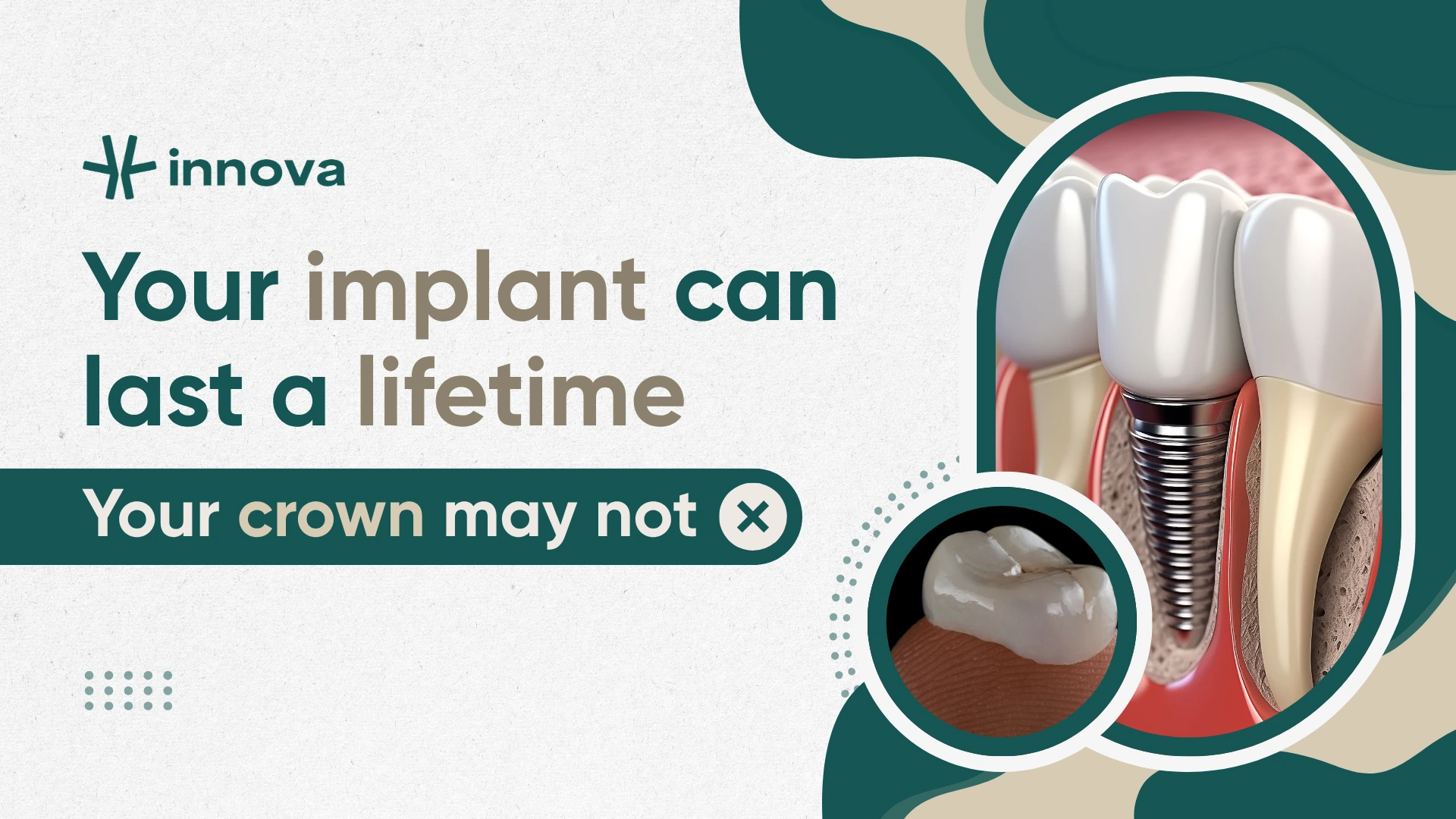
The implant post is the titanium piece surgically placed into the jawbone. Titanium is biocompatible, meaning the body does not reject it, and it forms a direct structural bond with bone through a process called osseointegration. Once that bond is established, the post is extremely stable. With proper care, the titanium post is designed to last a lifetime.
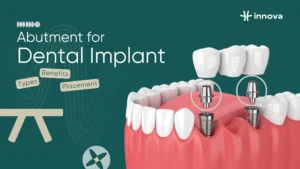
The abutment is the connector piece that attaches the post to the visible crown above the gum line. Like the post, the abutment is designed to be durable and long-lasting. In most cases, it does not need to be replaced unless there is a complication or a need to change the restoration on top.
The crown is the visible tooth portion. This is the component most likely to need replacement over time. Depending on the material used, where the implant is located in the mouth, and how well it is cared for, a crown typically lasts between 10 and 20 years before it may need to be replaced due to normal wear. Replacing a crown does not require removing the implant post. The underlying structure stays in place.
This distinction matters because when people say their implant failed or needs replacement, they are often referring to the crown, not the dental implant post itself.
What happens to dental implants after 20 years
Clinical research tracking implant patients over long periods consistently shows that the majority of implants remain stable and functional well beyond 20 years. A systematic review of long-term implant data found a 10-year implant survival rate of 96.4 percent at the implant level. A separate large-scale US multi-university dataset covering more than 50,000 implants placed between 2011 and 2022 found an overall implant survival rate of 98.6 percent over a mean follow-up of approximately 84 months, as documented in published clinical research. Studies tracking patients 20 to 25 years out show similarly strong outcomes when implants were properly placed and maintained.
What tends to change after 20 years is the crown, not the post. The crown may show wear, chipping, or aesthetic changes that make replacement worthwhile. In some cases, the bone and gum tissue around the implant may shift slightly over decades, which can affect how the restoration fits and looks. These are manageable issues that do not require losing the implant itself.
The patients most likely to experience problems at the 20-year mark are those who smoked, had untreated gum disease, or had bone loss that was not properly addressed before placement. Patients who maintain good oral hygiene and attend regular follow-up appointments consistently show the strongest long-term outcomes.
What affects how long a dental implant lasts
Several factors directly influence implant longevity. Some are within your control. Others depend on the quality of surgical planning and placement.
Oral hygiene. The gum tissue and bone surrounding an implant can develop infection, just as tissue around natural teeth can. Peri-implantitis is an inflammatory condition affecting the soft tissue and bone around an implant. It is the leading cause of late implant failure. If left untreated, it leads to progressive bone loss that eventually destabilizes the implant. Consistent brushing, flossing, and professional cleanings are the most effective protection against it. The blog on peri-implantitis and implant infections covers how this develops and what to watch for.
Smoking. Smoking reduces blood flow to the gum tissue, slows healing after surgery, and significantly increases the risk of both early and late implant failure. Research consistently shows that smokers have higher implant failure rates than non-smokers. Quitting before placement and staying smoke-free afterward makes a direct difference in long-term outcomes.
Bone quality and volume. The implant post needs adequate bone density and volume to achieve and maintain stable osseointegration. Patients who have experienced bone loss after tooth loss may need bone grafting before implant placement. Placing an implant into insufficient bone is one of the most preventable causes of failure. A thorough evaluation using CBCT 3D imaging before surgery is the only way to accurately assess bone quality and plan placement accordingly.
Systemic health conditions. Conditions that affect healing or immune response, such as uncontrolled diabetes, can increase the risk of implant complications. This does not mean patients with these conditions cannot receive implants. It means careful evaluation, treatment planning, and health management are essential before proceeding.
Teeth grinding (bruxism). Consistent grinding or clenching places excessive force on the crown and can accelerate wear or damage the implant connection over time. Patients who grind their teeth are typically advised to wear a custom night guard to protect both the restoration and the implant.
Implant location. Implants placed in the back of the mouth, particularly the lower molars, endure significantly more chewing force than implants in the front. This increases wear on the crown and the connection between the crown and the abutment. It does not typically affect the implant post itself but is a real factor in how long the crown lasts before needing replacement.
Surgical precision and planning. This is the factor patients have the least direct control over, but it may be the most consequential. An implant placed at the wrong angle, depth, or position faces uneven bite forces from day one. Over years, that mechanical stress accumulates. Surgeons who use CBCT imaging, guided surgery technology, and digital planning tools place implants with a level of precision that directly supports long-term stability.
Can dental implants fail
Implants can fail, and understanding why matters for anyone considering them.
Early failure typically occurs in the first few months after placement, before osseointegration is complete. The most common causes are infection at the surgical site, insufficient bone volume, and disruption of the healing process from smoking or failing to follow post-operative instructions.
Late failure occurs after successful integration and can happen years or even decades after placement. Peri-implantitis is the most common cause of late failure. Other causes include fracture of the implant post from excessive force, significant bone loss around the implant, or complications from systemic health changes.
Implant failure is uncommon. Long-term survival data consistently place rates at 96 to 98 percent at 10 years across large, diverse patient populations. Outcomes improve significantly when implants are placed by experienced oral surgeons using proper imaging and planning technology.
If an implant does fail, replacement is often possible after the site has healed and any underlying issues have been addressed. Success rates for replacement implants in properly prepared sites remain strong, though slightly lower than for initial placements.
Factors affecting implant lifespan that rarely get mentioned
Waiting too long after tooth loss. When a tooth is lost and not replaced, the jawbone in that area begins to resorb. This bone loss can make future implant placement more complex and may require bone grafting that would not have been needed with earlier intervention. The longer the gap remains, the more bone may be lost.
Skipping follow-up appointments. Peri-implantitis develops gradually and can progress significantly before causing noticeable pain. Regular monitoring with X-rays and clinical examination allows a surgeon to identify early bone changes around the implant before they become serious. Problems identified early are significantly easier to manage.
Crown material and fit. Not all crowns are equal. The material, the quality of laboratory fabrication, and how precisely the crown is matched to your bite directly affect how long it lasts. A poorly fitted or low-quality crown increases wear on the implant connection even before the crown itself shows visible damage.
Dry mouth from medications. Many common medications reduce saliva production. Saliva plays a key role in controlling bacterial levels in the mouth. Reduced saliva raises the risk of bacterial accumulation around the implant and increases the likelihood of peri-implantitis. Patients taking medications that cause dry mouth should flag this during their surgical consultation.
Full arch implants vs single implants: how longevity compares
Full arch restorations, such as All-on-X procedures, distribute bite forces across multiple implants rather than concentrating them on a single post. This load sharing reduces the stress on any individual implant compared to a single implant bearing all the chewing force for one position in the arch.
The prosthetic component in a full-arch case, the fixed bridge or restoration, does require maintenance over time just as individual crowns do. The implant posts themselves follow the same biological principles as single implants and have similarly strong long-term data when placed in adequate bone with proper surgical technique.
Practical steps to protect your implant long term
Brush twice a day using a soft-bristled brush. Clean between your teeth and around the implant site daily using floss, an interdental brush, or a water flosser to keep bacterial buildup away from the implant.
Attend all follow-up appointments. Regular check-ins allow your surgical team to monitor the bone and tissue around the implant and catch any early changes before they develop into larger problems.
Avoid smoking. Stopping before placement and staying smoke-free afterward is one of the most impactful decisions you can make for long-term implant health.
If you grind your teeth, wear a night guard. Protecting the crown and implant connection from excessive force extends the life of both significantly.
Avoid biting hard objects such as ice or hard candy with your implant crown. The crown is durable but not designed for those kinds of repeated forces.
Frequently asked questions
What happens to dental implants after 20 years? The implant post typically remains stable. What changes for most patients is the crown, which may wear over time and eventually need replacing. Bone and gum tissue can also shift slightly over decades, affecting how the restoration fits. None of these changes require losing the implant itself, and patients who maintain consistent oral hygiene and attend follow-up visits consistently have the best outcomes at the 20-year mark.
What is the most common cause of dental implant failure? Peri-implantitis is the most common cause of late implant failure. It is a bacterial infection affecting the gum and bone around the implant that, if left untreated, causes progressive bone loss and eventual implant instability. Early detection through regular monitoring is the most effective way to prevent it from advancing.
What does no one tell you about dental implants? That long-term outcomes depend heavily on what happens before the implant is placed, not just afterward. Bone quality, the accuracy of surgical planning, and the technology used during placement set the foundation for everything that follows. An implant placed with inadequate bone evaluation or imprecise technique faces challenges that proper aftercare alone cannot fully compensate for.
What are the downsides of dental implants? The upfront cost is higher than other tooth replacement options. The process takes several months from placement to final restoration. Some patients require bone grafting before placement, which adds time and cost. Like any surgical procedure, there is a small risk of complications. That said, no other tooth replacement option offers comparable long-term stability, bone preservation, or function.
How long do dental implant crowns last? Most crowns last between 10 and 20 years depending on the material, location in the mouth, and how well they are cared for. When a crown needs replacement, the implant post typically stays in place and only the visible component is changed.
Can I get dental implants at 25? Yes. Age is not a disqualifying factor as long as jaw development is complete, which is typically the case by the late teens. Younger patients often have excellent bone density, which supports strong osseointegration. The same evaluation criteria apply at any age: adequate bone volume, good overall health, and commitment to long-term care.
Thinking about dental implants
If you are considering dental implants or want to understand whether they are the right long-term solution for your situation, an evaluation with an oral surgeon is the most reliable starting point. Innova Dental Implant Institute, Dr. Dexter Mattox is a board-certified Oral Surgeon and Implant Surgeon with dual DMD and MD training. Every implant evaluation includes in-house CBCT 3D imaging and guided surgical planning so that every placement decision is based on accurate, complete information from the start.