

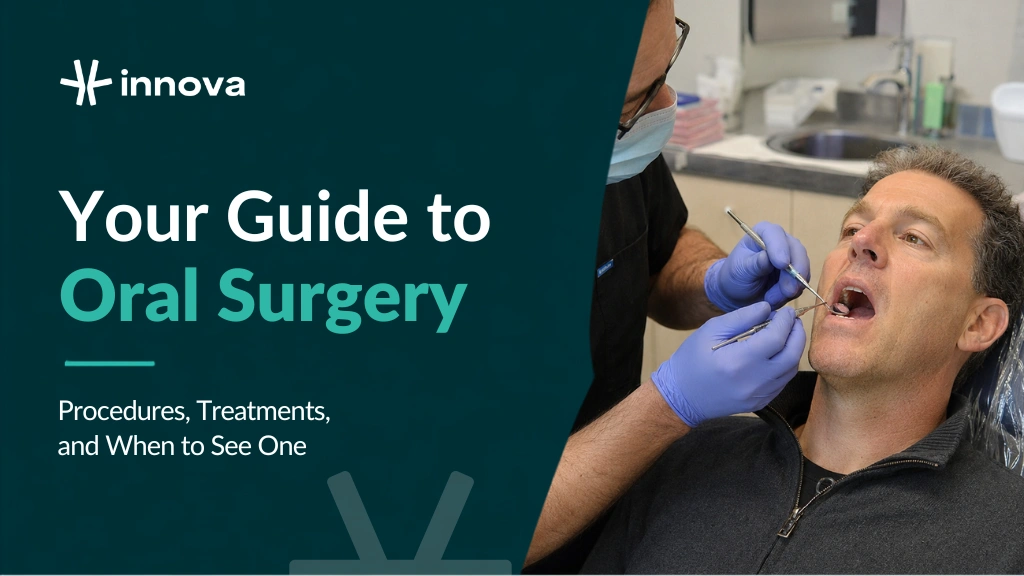
Most people hear the term oral surgeon and have a rough idea that it involves something more serious than a cleaning. But beyond that, the picture gets fuzzy fast. Oral surgeons are surgical specialists who handle cases that general dentistry is not trained or equipped to manage, from impacted wisdom teeth and dental implants to jawbone loss, oral tissue changes, and complex extractions.
If you have been referred to one, or you are trying to understand whether your situation calls for one, knowing what oral surgeons actually do, and how they differ from a general dentist, gives you a clearer path forward.
What Procedures Does an Oral Surgeon Perform?
Oral surgeons are surgical specialists who complete dental school followed by four to six years of hospital-based surgical residency. That training covers surgical techniques, anesthesia, treatment of oral infections and facial injuries, and surgical management of the teeth, jaw, mouth, and facial structures. Some oral surgeons also hold a medical degree alongside their dental degree, giving them a clinical foundation that spans both fields.
Wisdom tooth removal is among the most frequently performed oral surgery procedures. When wisdom teeth are impacted, stuck beneath the gum line, or growing at an angle, they can cause pain, swelling, infection, and damage to neighboring teeth. Oral surgeons evaluate tooth position and nerve proximity using CBCT imaging before removal and offer local anesthesia, nitrous oxide, or IV sedation depending on the case.
Dental implant placement involves surgically placing a titanium post into the jawbone to serve as the root for a replacement tooth. A single implant typically takes about 20 to 30 minutes under local anesthesia. The implant then integrates with the surrounding bone over several months, a process called osseointegration, before the final restoration is placed.
Surgical tooth extractions are needed when a tooth is broken at the gum line, has curved or fused roots, or sits close to a nerve or the sinus floor. These cases go beyond routine extraction and require a small incision, careful sectioning of the tooth, and suturing after removal.
Oral pathology and biopsy covers the evaluation of unusual tissue changes such as persistent sores, lumps, or discoloration that do not resolve on their own. When a tissue change warrants closer evaluation, a small sample is taken under local anesthesia and sent for laboratory analysis. Any change that persists beyond two to three weeks without an obvious cause is worth getting evaluated.
Procedures That Prepare the Jaw for Implants
Bone grafting is needed when jawbone volume has decreased after tooth loss. Without adequate bone, implant placement is not possible. Grafting adds bone material to the deficient area, which integrates over several months to create a stable foundation. Ridge preservation, done at the time of extraction, helps protect bone volume from the start.
Sinus lift procedures address insufficient bone height in the upper back jaw. The sinus membrane is gently elevated, and bone graft material is placed beneath it. Once healed, the area has the vertical height needed to support an implant securely.
Sedation and Comfort During Oral Surgery
Oral surgeons are trained in multiple forms of anesthesia and sedation. This is an important distinction from general dentistry, where sedation options are more limited.
Local anesthesia numbs the treatment area completely, so there is no pain during the procedure. Nitrous oxide is a mild inhalation option that helps patients relax while staying awake. IV sedation produces a deeper level of relaxation, and most patients have little or no memory of the procedure afterward. For teeth fully buried in the jawbone, or for patients with significant anxiety, IV sedation is often the most comfortable approach.
The right sedation option depends on the procedure, your health history, and your preferences. Your surgeon will walk through all the options before anything is scheduled.
When Should You See an Oral Surgeon?
Most patients come through a referral from their general dentist, but you can also reach out directly if any of the following apply. If you are in the Brunswick area and looking for a oral surgeon, an in-person evaluation is always the best starting point.
- Wisdom teeth are causing pain, pressure, swelling, or recurring infection
- A tooth that cannot be saved and needs to be removed surgically
- Missing teeth and interest in a long-term replacement option
- Jaw discomfort or swelling that has not improved
- Difficulty chewing or biting that has changed noticeably
- An unusual sore, lump, or tissue change that has not healed in two to three weeks
- Bone loss identified on dental X-rays that may affect future treatment
A consultation is not a commitment to any procedure. It is a chance to understand what is happening and what your options are.
What Happens at a Consultation?
The surgeon reviews your symptoms and health history, examines the area of concern, and takes or reviews imaging. CBCT imaging provides a three-dimensional view of the jaw, bone structure, tooth anatomy, and nerve position, allowing the surgeon to evaluate your situation thoroughly and plan any procedure accurately before treatment begins.
Certain medications, health conditions, and habits like smoking affect surgical planning and healing. Bringing a list of your current medications and any ongoing health conditions to the consultation helps the surgeon give you an accurate picture of your options and what recovery will look like for your specific case.
After the evaluation, the surgeon explains the findings, walks through treatment options, and discusses recovery expectations. You leave with a clear picture of what is going on and what your next steps could be, with no pressure to decide on the spot.
Recovery After Oral Surgery
For most outpatient oral surgery, the first two to three days involve the most swelling and soreness, with steady improvement each day after that. Soft tissue generally heals within two to four weeks. Bone healing after grafting or implant placement takes longer and is tracked at follow-up visits.
A few things that support smooth recovery: keep your head elevated the first day or two, apply ice to the outside of the jaw in the first 24 hours, stick to soft foods for several days, avoid vigorous rinsing or using a straw in the first 48 hours, and take any prescribed medications as directed. Avoiding smoking during the healing period makes a meaningful difference in how quickly the site heals.
Contact the office if you develop a fever, notice swelling that keeps increasing after the first few days, or experience pain that gets worse rather than better after 48 hours.
Frequently Asked Questions
What is the most common reason patients are referred to an oral surgeon? Impacted wisdom teeth are among the most frequent reasons for referral. Patients are also commonly referred for dental implant evaluation, complex extractions, bone grafting, and biopsy of unusual tissue findings in the mouth.
Do oral surgeons put you to sleep for surgery? It depends on the procedure and your comfort level. IV sedation produces deep relaxation, and most patients have little memory of the procedure. Local anesthesia alone is used for simpler cases. The right option is discussed and agreed upon before anything is scheduled.
Can I go directly to an oral surgeon without a referral? Yes. Many patients arrive through a referral from their dentist, but you can also contact an oral surgery practice directly to schedule a consultation if you have a concern that warrants an evaluation.
When should jaw pain be evaluated by an oral surgeon? Persistent jaw pain, worsening, affecting your ability to chew, or accompanied by swelling or a locking sensation is worth getting evaluated. An oral surgeon can identify the cause and determine whether a surgical or non-surgical approach is appropriate.
Ready to Understand Your Options?
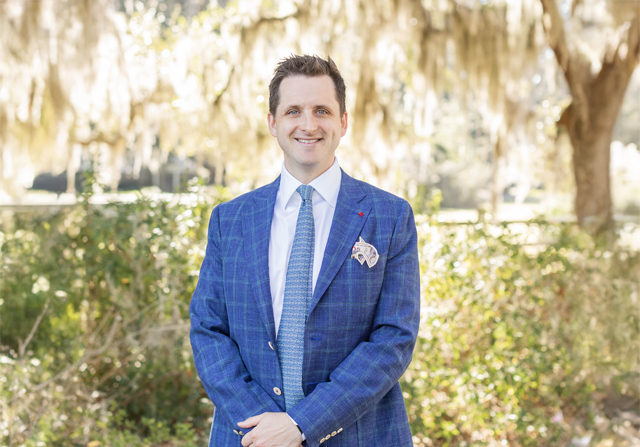
If you have questions about a condition or procedure, or you simply want to know what is going on, a conversation with a specialist is a good place to start. At Innova Dental Implant Institute, Dr. Dexter Mattox is a board-certified Oral Surgeon and Implant Surgeon with dual DMD and MD training. Every patient receives a thorough evaluation, and every treatment plan is built around that individual’s anatomy, health history, and goals.
We serve patients throughout Brunswick, St. Simons Island, Jekyll Island, Jesup, Waycross, Hinesville, and the surrounding Southeast Georgia communities.