

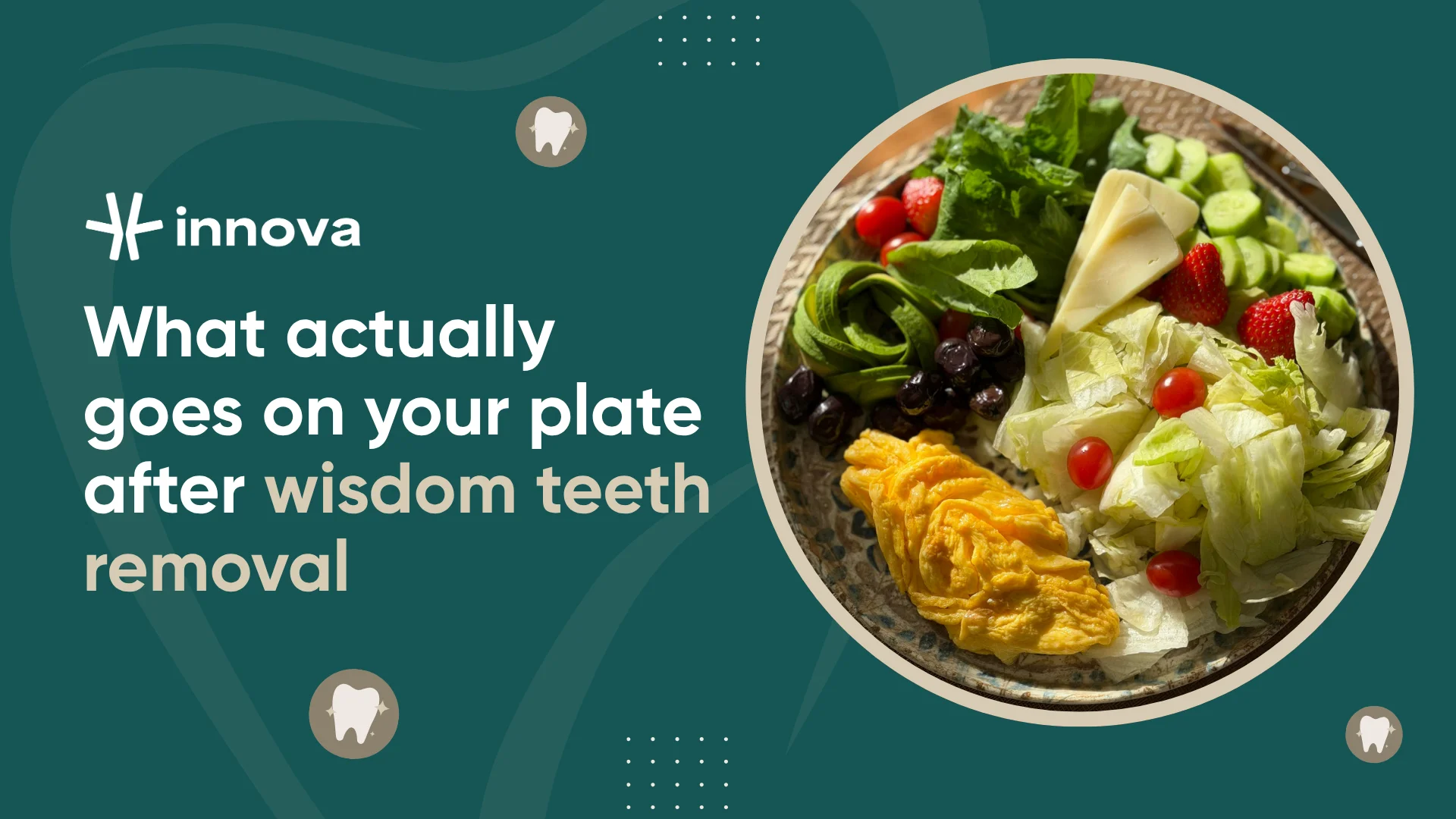
After wisdom teeth removal, diet is one of the most important parts of recovery and one of the most overlooked. Sticking to liquids and very soft foods for the first 24 hours gives the extraction site the best conditions to heal cleanly.
Most patients can introduce soft foods like scrambled eggs, mashed potatoes, and oatmeal by day two or three, and return to a largely normal diet within seven to ten days. What you eat during recovery directly affects how quickly the extraction site heals and whether complications like dry socket develop.
Avoiding straws, hot drinks, carbonated beverages, hard foods, and alcohol in the first week gives the blood clot the conditions it needs to stabilize and protect the healing socket. Every patient heals at a different pace, particularly those who had impacted or surgical extractions, so always follow the specific aftercare instructions provided after your procedure.
Why What You Eat After Wisdom Teeth Removal Matters
Recovery after wisdom teeth removal is not just about managing discomfort. What you eat in the days following your procedure directly affects how quickly and cleanly the extraction site heals.
After a tooth is removed, a blood clot forms in the socket. That clot protects the underlying bone and nerve tissue while your gum tissue gradually closes over the extraction site. Certain foods, drinks, and habits can dislodge or dissolve it before it has time to stabilize. Hard foods can physically disturb the site. Hot liquids can dissolve the clot. Carbonated drinks create pressure that works against clot formation. Even sipping through a straw generates enough suction to pull the clot free.
Patients who follow dietary guidelines carefully tend to recover faster, experience less post-operative pain, and are far less likely to develop dry socket.
How Long After Wisdom Teeth Removal Can I Eat
One of the most common questions I hear from patients before surgery is: how long after wisdom teeth removal can I eat?
Most patients are ready for small amounts of liquid or very soft food once the numbness from anesthesia wears off, typically two to three hours after surgery. Eating while your mouth is still numb increases the risk of accidentally biting your cheek or tongue, so wait until full sensation returns before attempting anything.
Start small. A few spoonfuls of yogurt or a cup of cold broth is a good starting point. If you had IV sedation and are experiencing some nausea as it wears off, wait until you feel settled before eating anything, even liquids. Patients who had a surgical extraction involving impacted teeth may find their appetite returns more slowly in the first 24 hours due to the more involved nature of the procedure, and that is completely normal.
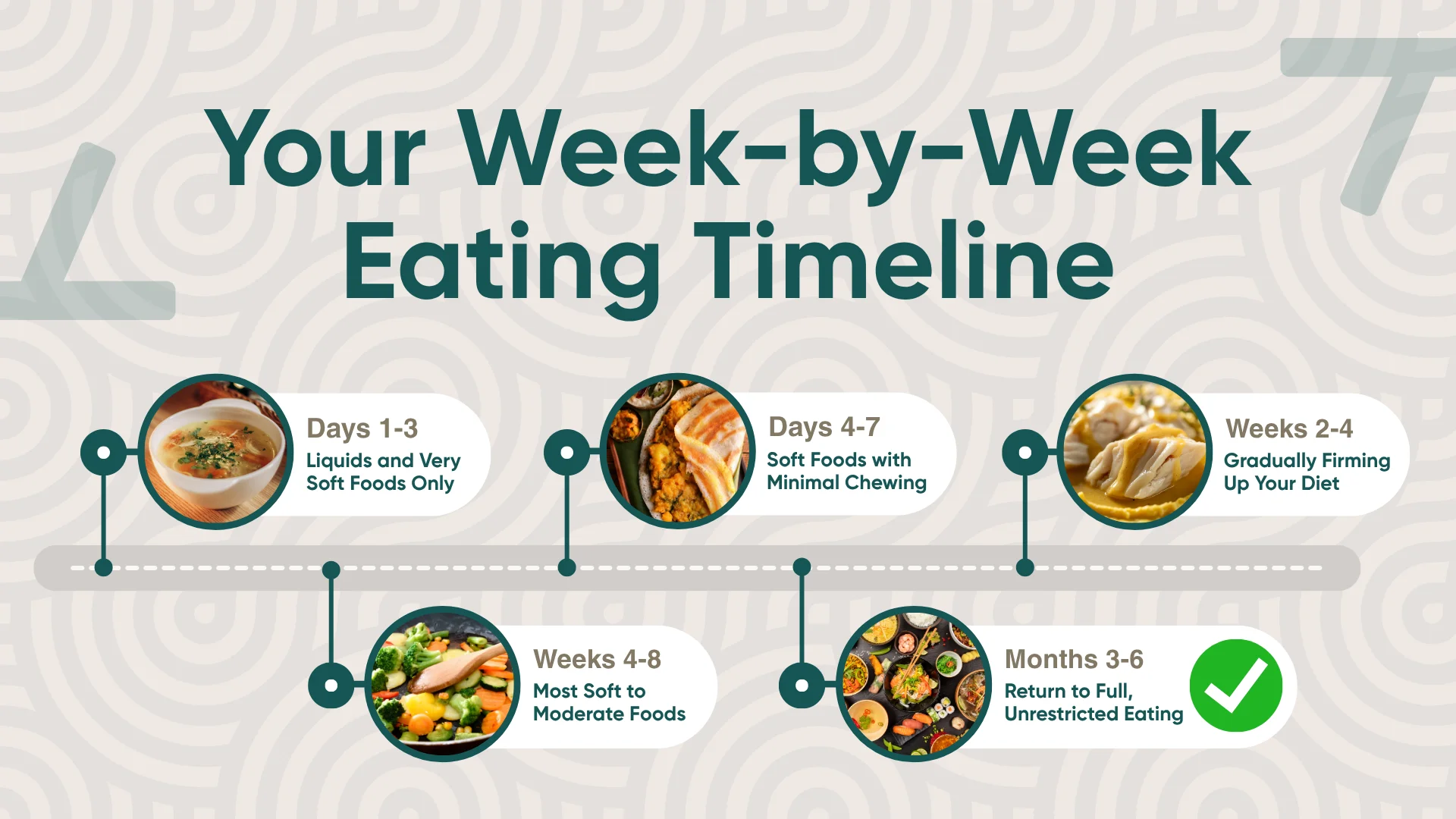
Day by Day Food Timeline After Wisdom Teeth Removal
| Day | What You Can Eat | What to Avoid |
| Day 1 | Water, cold broth, yogurt, ice cream, smoothies consumed with a spoon | Hot drinks, alcohol, straws, carbonated drinks, anything requiring chewing |
| Days 2 to 3 | Mashed potatoes, scrambled eggs, oatmeal at room temperature, soft pudding, blended soups | Crunchy or chewy foods, spicy foods, carbonated drinks, straws, seeds |
| Days 4 to 7 | Soft pasta, soft cooked fish, well cooked vegetables, soft bread without crusts | Hard foods, chewy meats, seeds, nuts, popcorn |
| Week 2 onward | Most normal foods introduced gradually as tolerated | Very hard or chewy foods until fully healed |
If you had a complex impacted extraction or multiple teeth removed, allow a few extra days at each stage before progressing. When in doubt, stay at your current food stage rather than rushing.
Best Foods to Eat After Wisdom Teeth Removal
First 24 to 48 hours:
- Yogurt – smooth, cold, and high in protein to support tissue repair
- Ice cream or sorbet – cold temperature helps reduce jaw swelling naturally
- Cold broth – provides hydration and nutrition without any jaw movement
- Smoothies – blend soft fruits with yogurt or milk and consume with a spoon, never a straw
- Applesauce and mashed banana – gentle, easy to eat from day one
Days 3 to 7:
- Mashed potatoes – filling and easy to prepare, avoid skins and crispy toppings
- Scrambled eggs – high quality protein, cook gently so they stay soft
- Oatmeal – fully cooked and cooled to room temperature, no nuts or seeds added
- Soft cooked fish – tilapia, salmon, or cod flake apart easily with minimal chewing
- Hummus, avocado, cottage cheese – nutritious soft options that work well mid-recovery
What Your Body Actually Needs to Heal After Wisdom Teeth Removal
Most recovery guides stop at telling you what is soft enough to eat. What they do not cover is that your body is actively rebuilding tissue after surgery, and what you eat directly affects how efficiently that happens.
Protein is the most important nutrient during the first week of recovery. Tissue repair depends on amino acids, and without adequate protein intake your body has less to work with. Yogurt, scrambled eggs, soft cooked fish, cottage cheese, and blended protein shakes without seeds or chunks are all good sources that fit within the soft food guidelines.
Vitamin C supports collagen production, which is essential for gum tissue healing. Cold broth made with vegetables, mashed sweet potato, and applesauce all provide vitamin C without requiring any chewing.
Hydration is consistently underestimated during recovery. Mild dehydration slows healing, increases fatigue, and can intensify the perception of pain. Sip water consistently throughout the day rather than drinking large amounts infrequently.
Patients who had IV sedation should be aware that the medication can suppress appetite for several hours after the procedure. Even if you do not feel hungry, small amounts of nutritious soft food from the first evening onward support a faster and more comfortable recovery than skipping meals entirely.
When Can I Use a Straw After Wisdom Teeth Removal
Patients ask me this question more often than almost any other after surgery, and the answer is straightforward: wait at least seven days before using a straw after wisdom teeth removal. For patients who had complex surgical extractions or multiple teeth removed, ten days is the safer approach.
When you sip through a straw, the suction creates negative pressure inside your mouth directed toward the path of least resistance, which in the days after surgery is the extraction socket. If that pressure dislodges the blood clot, the result is dry socket.
Dry socket, clinically known as alveolar osteitis, occurs when the bone and nerve inside the socket are left exposed instead of being protected by the clot. It typically develops two to four days after extraction and causes a deep, throbbing pain that radiates toward the ear and jaw. Unlike normal post-operative discomfort that gradually improves, dry socket pain tends to worsen over time and requires a return visit to have the socket cleaned and dressed with medicated dressing until healing resumes.
The same suction principle applies to smoking, vaping, and drinking from bottles with narrow openings. All carry the same dry socket risk during the early healing window. If drinking without a straw is difficult, sip slowly from a wide glass with small, gentle sips.
When Can I Eat Solid Food After Wisdom Teeth Removal
Another question I hear frequently in the days following surgery is when solid foods are back on the table. For most patients, the answer is around day seven, though the right timing depends on how recovery has progressed individually.
The transition should be gradual. Start with foods that have some texture but yield easily when chewed, such as well cooked pasta or soft bread without crusts. Chew on the opposite side from the extraction site wherever possible. If solid foods cause pain or any bleeding at the extraction site, return to soft options for another two to three days.
Patients who had impacted wisdom teeth removed surgically typically need to wait ten to fourteen days before comfortably eating solid foods. Swelling and jaw stiffness following a more involved procedure limits how wide you can open your mouth regardless of food texture. By week two, most patients are eating a largely normal diet with the exception of very hard or chewy foods.
Simple Meal Ideas for Your First Week of Recovery
Day 1:
- Cold Greek yogurt blended with mashed banana and a drizzle of honey
- Small cup of cold chicken broth sipped slowly from a wide glass
- Smooth vanilla ice cream or mango sorbet as an evening option
Days 2 to 3:
- Soft scrambled eggs with mashed avocado on the side
- Warm blended butternut squash soup cooled to room temperature
- Smooth peanut butter thinned slightly with warm water, eaten with a spoon
Days 4 to 7:
- Soft baked salmon flaked apart served with mashed sweet potato
- Well cooked pasta with a light butter sauce and soft steamed carrots
- Cottage cheese with soft ripe peach or mashed mango
Tips for a Smooth Recovery
- Eat on the opposite side from the extraction site for at least the first five days
- Keep food and drinks cold or at room temperature for the first 48 hours to manage swelling
- Rinse gently with warm salt water after eating from day two onward to keep the socket clean
- Stay well hydrated throughout the day with water sipped slowly from a wide glass
- Do not skip meals even when eating feels uncomfortable, your body needs consistent nutrition to heal
- Avoid smoking for at least 72 hours after surgery as it creates suction and introduces chemicals that significantly impair healing
- Prioritise protein and vitamin C rich soft foods from day one to give your body the building blocks it needs for tissue repair
Ready to Address Your Wisdom Teeth in Brunswick, GA?
Wisdom teeth that are painful, impacted, or causing recurring problems will not resolve on their own. The sooner they are addressed, the simpler the procedure and the faster the recovery. Dr. Mattox performs wisdom teeth removal in Brunswick, GA using advanced 3D imaging and precise surgical techniques, with IV sedation available so you stay completely comfortable from start to finish.